Routes, Receivers and Room Plans: Reconstructing Access at Manchester 2013

Access is often discussed at conferences as a matter of intention. The archive of Manchester 2013 suggests it is better understood as a matter of evidence. A step-free route is not a step-free route because a programme says so; it is step-free only when a delegate can follow it without asking for help. A hearing loop is not a hearing loop unless it is switched on, signed and working in the room where it is needed. The Manchester record does not offer a complete account of access provision, but it does offer something useful: a set of traces that show where access was planned, where it was assumed, and where it disappeared between the promise and the room.
Reading Access in the Margins
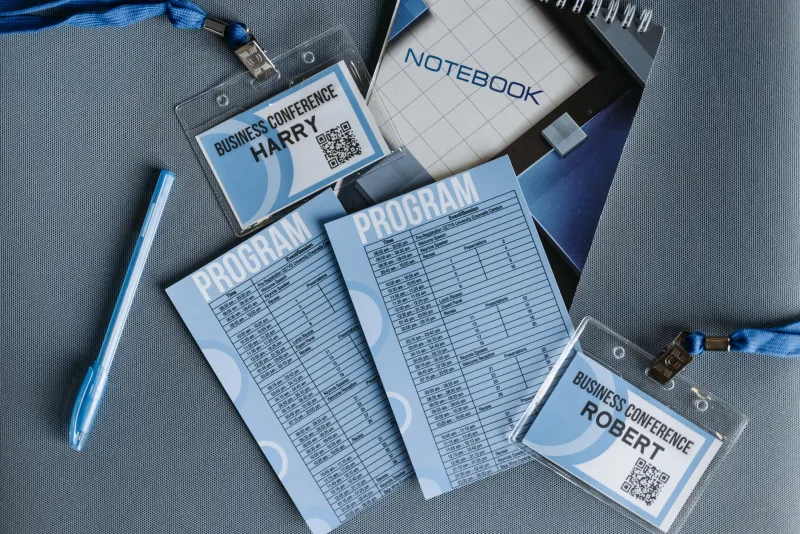
The first place to look is not the formal programme but its margins. Programme annotations, room allocations, last-minute changes and handwritten notes all record the practical work of making a conference usable. In the Manchester 2013 material, access appears in fragments: a note about an entrance, a query about seating, a request for a quiet space, a reference to interpreting support. These fragments are not a full audit. They are, however, a reminder that access was being negotiated across several documents at once, often by people who were not formally responsible for it.
For 2026 conveners, the lesson is methodological. An access audit should begin with the paperwork that delegates actually receive and use: the programme, the venue map, the registration form, the email updates and the signage. If access information is only in a convenor's inbox, it is not yet provision. It is a promise waiting to be tested.
What the Room Plans Reveal
Room plans from Manchester 2013 are particularly suggestive. They show not only capacity but also sightlines, doorways, aisle widths and the position of screens and speakers. Read alongside delegate correspondence, they allow us to ask a more precise question than whether a room was 'accessible'. Was the accessible entrance the same as the main entrance? Was the route to the room step-free, or step-free only after a detour through a service corridor? Were wheelchair spaces distributed through the room or clustered at the back? Could a delegate using a hearing aid sit close enough to the speaker without blocking an aisle?
These questions matter because access is relational. It depends on the route, the room and the person moving through them. A venue can be technically compliant and still practically difficult. The Manchester record does not let us settle every such question, but it shows how often the answers were left to improvisation. A room plan that marks a door is not the same as a route that a delegate can rely on.
Correspondence as Evidence
Delegate correspondence is the most fragile and most illuminating part of the access record. It captures the questions people asked before arriving: whether the venue was step-free, whether captions would be provided, whether a quiet room was available, whether a companion ticket was possible, whether the conference dinner venue could be reached without stairs. These are not marginal enquiries. They are the practical terms on which participation depends.
In the Manchester 2013 archive, such correspondence is scattered and incomplete. Some enquiries are answered clearly; others are passed between addresses; others seem to have been resolved by phone or in person and left no written trace. That pattern is itself a finding. Access provision that depends on private correspondence is difficult to audit, difficult to inherit and difficult to improve. For 2026, the archive argues for a simple principle: access information should be public, specific and dated, with a named contact and a clear deadline for requests.
The Gaps Between Promise and Provision
The Manchester record also shows how easily access can fall between categories. A hearing loop may be listed as a venue facility without being checked in each room. A captioning request may be accepted before it is clear who will provide it. A quiet room may be scheduled but not signposted. A step-free route may exist but be locked, cluttered or known only to staff. These are not failures of goodwill. They are failures of documentation and handover.
This is where the archive has value for 2026 conferencing. It allows us to treat access not as a statement of values but as a chain of practical steps. Each step needs an owner, a check and a visible record. The absence of such a record in 2013 is not a reason to dismiss the event. It is a reason to make the 2026 record better.
A 2026 Access Audit Checklist
Drawing on the Manchester traces, a practical audit for UK anthropology conferences in 2026 might include the following checks.
- Step-free routes: Confirm the route from the nearest public transport stop, the main entrance, registration, each session room, toilets, catering and social venues. Publish a route description and mark it on a map.
- Room-level checks: Record doorway widths, aisle widths, seating positions for wheelchair users and companions, sightlines to screens and interpreters, and the location of power sockets.
- Hearing support: Specify the type of system, the rooms covered, whether it is checked on the day, and how delegates can test it in advance.
- Captioning and interpreting: State what will be provided, for which sessions, by whom, and by what deadline requests must be made. Include British Sign Language where relevant.
- Quiet retreat: Identify a named room, its opening hours, its location and whether it can be booked privately.
- Advance information: Publish access details at least eight weeks before registration, with a named contact and a clear process for adjustments.
- Emergency planning: Ensure evacuation arrangements are available in accessible formats and discussed with delegates who need them.
From Archive to Practice
The Manchester 2013 archive cannot tell us that access was adequate. It can tell us where access was discussed, where it was assumed and where it was left to chance. That is enough to make the record useful. For 2026 conveners, the task is not to reconstruct the past perfectly but to build a present that is easier to audit. A conference that publishes clear access information, checks its rooms and names its responsibilities is not merely more inclusive. It is more honest about what it promises.