Minutes as Currency: Reconstructing Timekeeping and Overrun at Manchester 2013
The Programme as a Ledger of Attention
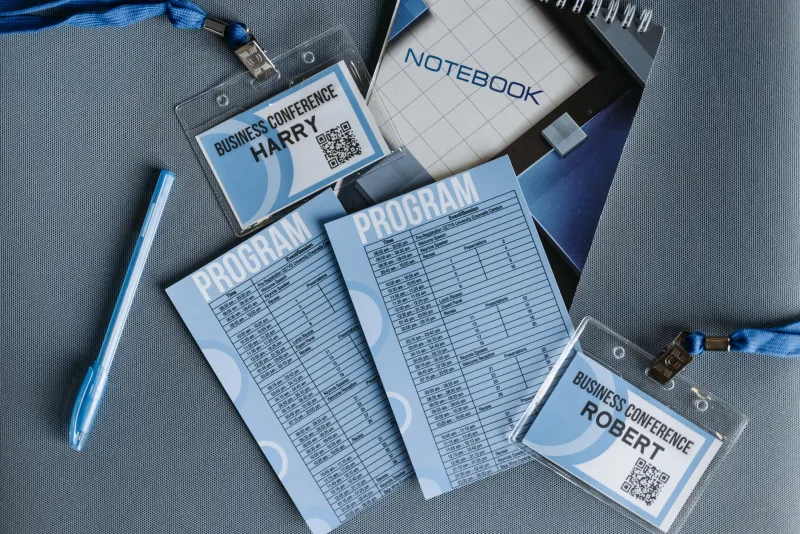
A conference timetable is often read as an administrative artefact: a grid of names, rooms and quarter-hours. In the Manchester 2013 record, however, the programme behaves more like a ledger of attention. Each slot records a distribution of a scarce resource — time — and the annotations around those slots show how that resource was contested, adjusted and sometimes quietly redistributed. For anyone planning a UK anthropology conference in 2026, the Manchester timings are not merely historical detail. They are evidence of how scheduling decisions shape whose work is heard at length, whose is compressed, and whose interventions become footnotes to someone else’s overrun.
The archive does not offer a single, clean record of every session. It offers a composite: printed programme entries, chair notes, delegate annotations and the occasional handwritten correction. Read together, these fragments allow a reconstruction of how time was allocated and how it was actually spent. The picture is familiar to anyone who has chaired a panel, but the Manchester material makes the pattern unusually visible. Timekeeping was not a neutral backdrop to intellectual exchange; it was part of the exchange.
Who Gains a Minute?
The formal programme allotted papers in standard units, but the archived notes suggest that the standard unit was rarely the lived unit. Some sessions began late because rooms changed or audiences lingered. Others were extended by chairs who judged that a discussion deserved room. Still others were compressed because a speaker had overrun or because a plenary had eaten into the break. The question worth asking of the Manchester record is not simply whether sessions ran to time, but who benefited when they did not.
In several annotated sessions, the pattern is not random. Senior or visiting speakers appear more likely to be granted leeway, while early-career researchers and postgraduate presenters appear more likely to be asked to shorten. This is not necessarily a story of individual unfairness. It is a structural story about discretion. When a chair has the authority to extend one paper and truncate another, the exercise of that authority can reproduce hierarchies that the programme itself was meant to flatten. The Manchester annotations do not prove intent, but they do show discretion in action.
Annotations and the Chair’s Discretion
The most revealing traces in the archive are the small marks made around the timetable: a line through a title, a note that a paper was taken as read, a bracket around a discussion period, a reminder to “keep to time”. These marks are not neutral. They record judgements about what mattered enough to be protected and what could be sacrificed. In some cases, the chair’s notes indicate a deliberate decision to protect discussion at the expense of a paper’s full delivery. In others, they indicate that a speaker was cut short to preserve the schedule.
For 2026 conference organisers, the lesson is not that chairs should be stripped of discretion. It is that discretion should be transparent and distributed more fairly. A chair who silently extends a favoured speaker’s slot is making a scheduling decision with intellectual consequences. A chair who routinely truncates the last paper in a session is doing the same. The Manchester record suggests that these decisions were rarely recorded in the formal minutes, even when they were noted on the programme itself.
Overrun as Intellectual Agenda-Setting
Overrun is often treated as a minor inefficiency. The Manchester material suggests something more consequential. When a session overruns, it does not simply displace a coffee break; it can displace the papers scheduled after it. In a parallel session, an overrun in one room can pull audiences away from another. In a plenary, it can shorten the discussion that follows. The cumulative effect is an intellectual agenda set not by the call for papers but by the uneven distribution of minutes.
The archive also shows how overrun can become a form of authority. A speaker who takes extra time is, in effect, claiming that their argument requires it. That claim may be justified, but it is rarely examined. The Manchester notes include instances where chairs allowed an overrun because the discussion was substantive, and instances where they resisted because the schedule had to hold. The difference between these outcomes often depended on the chair’s assessment of the room, the speaker’s status and the pressure of the programme. None of these factors is a reliable measure of intellectual value.
Lessons for 2026 Schedulers
UK anthropology conferences in 2026 face many of the same pressures as Manchester 2013: limited rooms, parallel sessions, international delegates with travel constraints and a strong desire to maximise participation. The Manchester archive does not offer a perfect model, but it does offer a set of practical warnings. First, the programme should build in explicit buffers rather than relying on chairs to absorb overrun. Second, chairs should be briefed to record any significant deviation from the timetable, not to hide it. Third, session design should avoid placing early-career researchers in the slots most likely to be sacrificed.
A fourth lesson concerns the distribution of discussion time. The Manchester record suggests that discussion was often the first casualty of overrun, even though it was frequently the most valuable part of the session. A 2026 programme that protects discussion by design — for example, by scheduling shorter papers with longer chaired conversation — may be more equitable than one that simply extends the number of speakers.
A Modest Protocol
The archive points towards a modest protocol for fair timekeeping. Chairs should announce at the start of each session how time will be managed and how overrun will be handled. Any extension should be recorded and justified. Any truncation should be noted, with the speaker’s consent where possible. Conference organisers should review session timings after the event, not to police individual chairs but to identify patterns of unequal access.
None of this is revolutionary. It is simply the application of ordinary fairness to an ordinary conference instrument. Yet the Manchester 2013 record shows that the timetable is never merely administrative. It is a political document, written in minutes. Reading it carefully is one way of ensuring that the 2026 conference programme distributes attention more justly than its predecessors did.