Carrying the Conference: Manchester 2013’s Delegate Bag as an Ethics Ledger for 2026

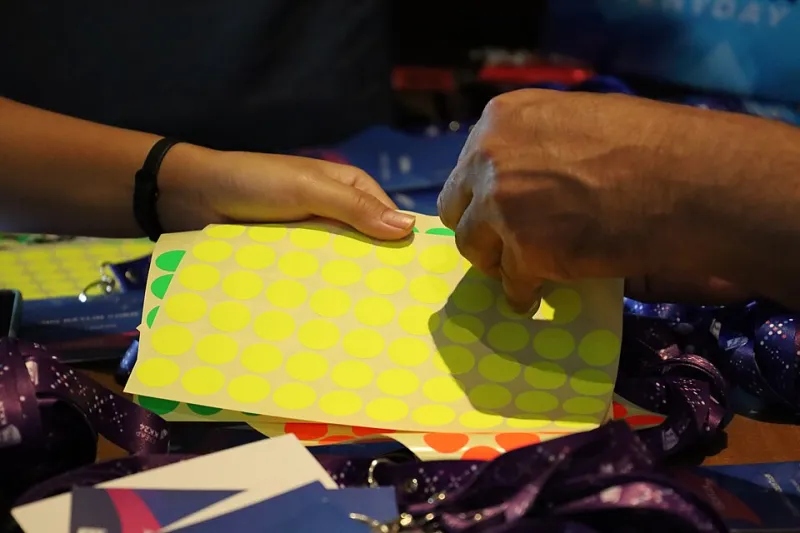
Photo: reusable conference tote bag with printed programme map and leaflets on table, via i.pinimg.com
At first glance, the delegate bag from Manchester 2013 is the least consequential object in the archive. It is the sort of item that ends up under a desk, reused for groceries or quietly discarded after the journey home. Yet the bag and its contents are unusually good evidence of how a conference imagined its delegates. A map, a programme, a pen, sponsor inserts and a few practical comforts do not simply fill a tote. They encode assumptions about movement, note-taking, commercial participation and care. For UK anthropology conferences in 2026, when questions of conference swag, sustainability and sponsor visibility are often reduced to a simple choice between keeping and cutting, the Manchester record suggests a more careful question: what work does each item actually do?
The bag as a portable programme
The programme proper tells delegates where to be. The bag tells them how to behave on the way there. In the Manchester 2013 record, the tote functions as a portable extension of the printed programme: a folded map for finding rooms and streets, a pen for marginal notes, leaflets that sit alongside the formal schedule. These are modest objects, but they are also aids to participation. A map is not a luxury for a delegate arriving in an unfamiliar city; it is an accessibility tool. A pen is not a trinket if the sessions encourage annotation. Even the bag itself, carried between venues, becomes part of the conference’s spatial grammar.
Archive notes and surviving examples suggest that the bag was never a neutral container. It was a curated object. Someone decided which inserts were worth the weight, which map was legible, which sponsor materials were acceptable and which practical items could be justified. That curatorial work is exactly what 2026 conveners are now asked to do again, often under tighter budgets and stronger sustainability expectations.
Sponsor visibility and the quiet bargain
Conference bags have long carried advertising. A publisher’s flyer, a university press catalogue or a sponsor’s insert is part of a bargain: commercial visibility in exchange for support that helps keep delegate fees down or pays for practical amenities. The Manchester 2013 material record does not make that bargain inherently suspect. It makes it visible. The ethical question is not whether sponsors appear, but whether their presence is proportionate, transparent and useful.
In 2026, many UK conferences have moved inserts online or replaced printed flyers with QR codes. That can reduce waste, but it can also obscure the bargain. A delegate should be able to see who has supported the event and why. A sponsor list on the conference website, clearly labelled inserts and an easy opt-out from promotional material are not bureaucratic extras; they are the conditions of a fair exchange. The Manchester bag suggests that sponsor visibility works best when it is bounded. A leaflet that helps a delegate find a relevant book series is different from a bag filled with unsolicited paper. Conveners in 2026 can use that distinction as a procurement test rather than treating all sponsor material as equally necessary.
Useful minimalism and the 2026 procurement question
The phrase ‘useful minimalism’ can sound like an excuse for doing less. The Manchester example suggests something more exacting: keep what earns its place. A pen that is used throughout the conference has a defensible afterlife. A map that prevents a delegate from missing a session has practical value. A bag that becomes a everyday shopping bag after the event has a second life. An item that is admired for a moment and then abandoned has neither.
For 2026 UK anthropology conveners, this means asking about durability, repairability and local sourcing before asking about branding. It means resisting the assumption that a lighter bag is automatically a better bag if it tears before the final plenary. It also means recognising that delegates are not identical. Some will want paper; some will rely on digital schedules; some will need a physical map because phone batteries fail. Useful minimalism is not a single object list. It is a discipline of justification.
Afterlife, storage and accountability
The delegate bag also has an afterlife that conference planning often ignores. Bags are left behind. Inserts are discarded. Spare stock is stored or, worse, quietly binned. The Manchester 2013 archive cannot settle every question about waste, but it can prompt better ones. Who owns leftover bags after the event? Can unused inserts be returned to sponsors? Can a local charity, student society or community group make use of surplus stationery? A short afterlife plan written into the procurement process is more useful than a last-minute appeal to volunteers.
This is where the archive becomes a teaching resource as well as a historical record. A seminar on conference ethics can compare the 2013 bag with a hypothetical 2026 equivalent and ask what each item is for, who pays for it and where it goes afterwards. The exercise is small, but it trains the kind of judgement that larger sustainability policies often assume.
A modest checklist from the tote
A 2026 convener need not reproduce the Manchester bag. The point is not nostalgia for printed ephemera. The point is to treat the bag as an ethics ledger with five entries: purpose, sponsor transparency, accessibility, afterlife and record. If each item can answer those five questions, the bag is doing more than carrying branded merchandise. It is carrying the conference’s values.
The Manchester 2013 tote is a modest object, but modesty is not the same as insignificance. In a discipline that studies material culture, it would be odd to ignore the material culture of the conference itself. The bag tells us what delegates were expected to need, what sponsors were allowed to say and what organisers were prepared to carry. In 2026, UK anthropology conferences can use that record not as a template but as a prompt: pack deliberately, justify each item and plan for what remains after the last session ends.