Before the Programme: Manchester 2013’s Call for Papers and the Craft of Fair Convening
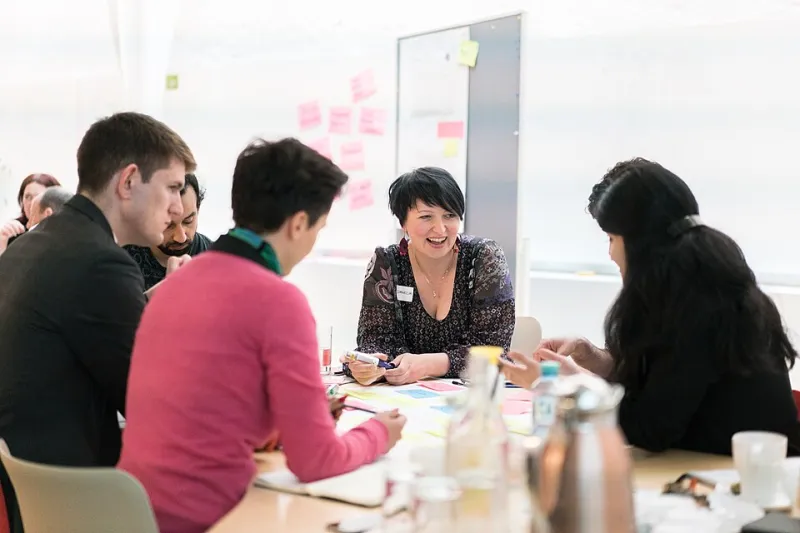
Photo: EU2016 NL from The Netherlands, CC BY 2.0, via Wikimedia Commons
The Document Before the Document
Conference archives tend to privilege the finished programme: the plenary names, the panel titles, the polished abstracts. Yet the call for papers is the document that makes the programme possible. It is where an organising committee first states what kind of conversation it hopes to convene, who is invited to speak, and what forms of labour will be required before anyone reaches a lectern. The Manchester 2013 call for papers, preserved within the IUAES 2013 Archive, deserves attention for precisely this reason. It is not merely a notice of deadlines. It is a record of rhetorical choices, institutional assumptions and practical compromises that shaped participation long before the first session began.
For UK anthropology organisers preparing events in 2026, the 2013 call offers a useful mirror. It allows us to ask not only what the document said, but what it left unsaid, and how those silences might be addressed in contemporary calls for participation.
Keywords as Invitations and Boundaries
A call for papers is built from keywords, and keywords do boundary work. They signal the intellectual territory an event hopes to occupy, but they also imply what lies outside it. The Manchester 2013 call framed anthropology through a broad set of thematic concerns, from disciplinary method to interdisciplinary encounter, while relying on a vocabulary that presumed familiarity with conference conventions. Terms such as ‘panel’, ‘abstract’, ‘convenor’ and ‘discussant’ carried an entire institutional grammar. For experienced delegates, that grammar was reassuring. For newcomers, it may have been less transparent.
Organisers in 2026 can learn from this by treating keywords as invitations rather than filters. A call that names its concepts is useful; a call that also explains how those concepts translate into session formats, roles and expectations is fairer. UK departments now include more doctoral researchers, early-career anthropologists and practitioners than they did in 2013, and a contemporary call should make the relationship between keywords and participation explicit. The Manchester document shows how much intellectual framing is packed into a short list of terms, and how easily that framing can remain implicit.
Deadlines, Time Zones and the Politics of Notice
Deadlines are often presented as neutral administrative facts. In practice, they distribute advantage. The Manchester 2013 call set out a timetable that assumed delegates could plan months in advance, secure institutional support and coordinate with co-authors across institutions. Such assumptions were not unreasonable for a major international congress, but they were assumptions nonetheless. A deadline is also a statement about whose working rhythms are considered normal.
For 2026 organisers in the UK, the lesson is not to abandon deadlines but to design them with greater care. Clear notice periods, explicit time zones for submission, and realistic turnaround times for review all matter. The 2013 call reminds us that international participation depends on more than goodwill; it depends on the temporal architecture of the invitation. A call that states its deadlines plainly, explains the review process and acknowledges the pressures facing colleagues with teaching, caring or visa-related constraints is more accessible without being less rigorous.
Inclusion Claims and the Labour They Conceal
Many calls for papers include a sentence about inclusion. The Manchester 2013 call participated in this convention, as do most contemporary conference announcements. Yet inclusion is not achieved by a phrase. It is achieved through the labour of convenors, reviewers, interpreters, accessibility coordinators and session chairs. The 2013 document, like many of its kind, could not fully record that labour. It could only gesture towards it.
This is where the archive becomes especially useful for 2026 organisers. Reading the call alongside the programme and delegate ephemera preserved in the Manchester collection reveals a gap between the invitation and its implementation. The call invited broad participation; the programme shows who ultimately appeared. The call announced themes; the ephemera show the practical work of translation, scheduling and hospitality that made those themes legible. A fair call for papers should therefore be accompanied by a clear account of the labour that will support it. Who will review abstracts? How will accessibility requests be handled? What support exists for delegates who are not native English speakers? The Manchester record does not answer every question, but it shows why the questions must be asked.
A 2026 Checklist Drawn from 2013
What, then, can a UK organiser in 2026 take from the Manchester 2013 call? First, a reminder that the call is the first substantive statement of a conference’s values. It should be written as carefully as the programme. Second, a commitment to plain description: roles, formats and expectations should be explained rather than assumed. Third, a realistic timeline that acknowledges the varied conditions under which anthropologists work. Fourth, an inclusion statement that is matched by named support mechanisms. Fifth, a record of the call itself. The Manchester 2013 document survives because someone kept it. Contemporary organisers should preserve their calls, revisions and correspondence as part of the intellectual history of the event.
What the Call Could Not Say
No call for papers can anticipate every difficulty. The Manchester 2013 document could not predict which panels would flourish, which delegates would withdraw, or which conversations would continue long after the closing plenary. But it could set a tone. Reading it today, one is struck less by its omissions than by its ambition: the ambition to convene a discipline across borders, institutions and career stages. That ambition remains relevant in 2026. The task for organisers now is to write calls that are clearer, fairer and more honest about the labour of gathering — while preserving the openness that made Manchester 2013 a meaningful encounter in the first place.