After the Plenary: Interdisciplinary Claims, Archived Dissent and the Case for the Manchester Minute
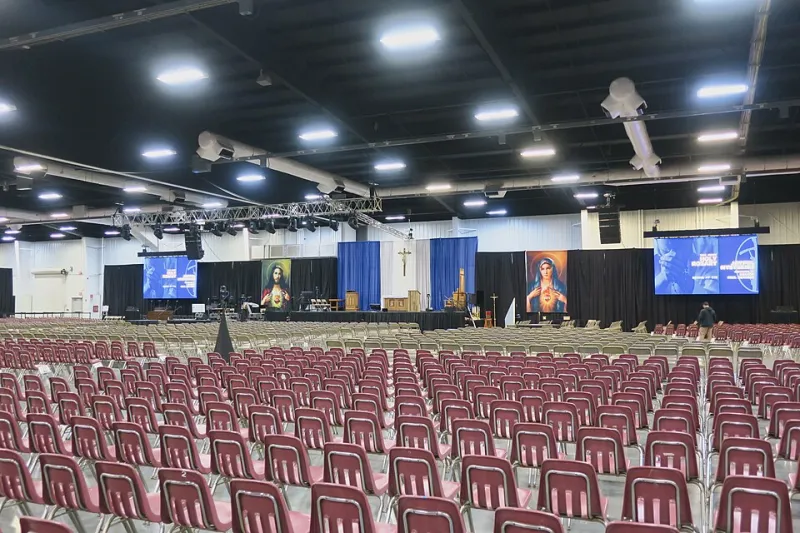
Photo: Nheyob, CC0, via Wikimedia Commons
The closing plenary of the Manchester 2013 congress is easy to misread from a distance. In the IUAES 2013 Archive it appears as a summary event: a stage, a panel, a final statement about anthropology's outward-facing future. Programme notes list the session as a synthesis of the week's themes, while later delegate reflections describe a room in which interdisciplinary anthropology was endorsed without much dissent. That reading is partly right. It is also too tidy.
For a 2026 reader, the plenary is useful less as a verdict than as a stress test. UK anthropology departments now work under conditions that the 2013 session could name but not fully anticipate: constrained budgets, fixed-term teaching contracts, the audit rhythms of REF preparation, and the quiet erosion of small specialist units. The question is not whether the plenary was correct about interdisciplinarity. It is whether its record gives us a usable account of how anthropologists disagreed about it.
What the plenary got right
The strongest claim in the closing session was that anthropology's future lay less in defending a core than in negotiating its edges. The archived programme supports that emphasis. Across the week, panels on science and technology studies, medical anthropology, environmental change and material culture showed how often anthropological work was already happening in mixed methodological company. The plenary did not invent that traffic, but it gave it a public frame.
It also got right the institutional tone. Interdisciplinarity was presented as a form of intellectual maintenance rather than a branding exercise. That distinction matters in 2026, when UK universities are tempted to advertise cross-disciplinary centres while cutting the language teaching and regional expertise that make genuine comparison possible. The Manchester session, at its best, treated collaboration as a demand on theory, not a substitute for it.
What it missed
The plenary's weakness was procedural. It tended to convert disagreement into a sequence of agreeable summaries. Delegate reflections in the archive point to questions that were raised but not recorded as substantive alternatives: who bears the cost of interdisciplinary training; how early-career researchers are expected to move between fields while remaining legible to disciplinary hiring panels; and why international participation can be celebrated in plenary rhetoric while remaining uneven in practice. These were not minor caveats. They were the conditions under which the interdisciplinary claim would be tested.
The session also underplayed the unevenness of institutional capacity. A department with a large postgraduate community can treat boundary work as a collective project. A small department with two or three anthropologists cannot. In 2026, with several UK institutions reviewing their portfolio, that difference is not an abstract point about resources. It shapes what counts as a credible research strategy.
The minute as durable record
This is where the archive's most useful lesson lies. Conferences produce programmes, abstracts and keynote recordings, but they rarely produce a short, public, durable record of what was actually contested. The closing plenary could have done that. A conference minute of two or three pages, written for public deposit, would not need to capture every exchange. It could record the main claims, the named alternatives, the unresolved questions and the points on which the panel did not agree.
Such a minute would be a modest instrument, but it would change the archive. Instead of a smooth narrative of consensus, future readers would find evidence of intellectual friction. That is valuable for teaching as well as research. A seminar can do more with a recorded disagreement than with a polished summary. It can ask students to reconstruct the argument, identify what was at stake and test the claims against later developments.
A 2026 test
The test for reviving the Manchester minute is practical. UK departments in 2026 are not short of meetings; they are short of records that remain useful after the meeting ends. A minute deposited with a conference archive, however brief, gives future researchers something that a keynote abstract cannot: a dated account of how a discipline described its own boundaries.
The 2013 closing plenary got the direction right. It missed the record. If the archive is to preserve more than programme titles, it should preserve the shape of disagreement. The Manchester minute is a small way to do that, and a timely one.