Uncaptioned Voices: A Teaching Audit of Manchester 2013's Plenary Audio for 2026 Events
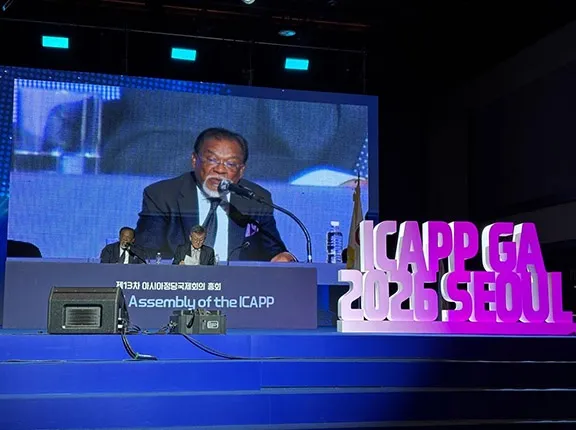
Photo: Press Information Department, Public domain, via Wikimedia Commons
Among the files that survive from the 2013 Manchester congress, the plenary recordings are among the most instructive precisely because they are incomplete. As of November 2026, the archive's audio remains a resource for teaching event design rather than a seamless record. Some sessions carry partial transcripts; others carry none. Room noise, platform changes, audience interjections and the occasional unamplified remark all remain in the recording, but not always in the written record. For anyone planning a 2026 conference, that discrepancy is not a technical failure to be mourned. It is a syllabus.
What the Audio Actually Contains
An audit of the surviving plenary audio shows a familiar pattern. The main speaker is usually audible, though not always evenly. Chairs drift away from microphones. Audience questions arrive from the floor without amplification. Applause, laughter and movement punctuate the file. In a few cases, a sequence is clear in audio but absent from the transcript, or present in the transcript but difficult to hear. The archive therefore documents two related things: what was said, and what the recording system was able to capture.
That distinction matters for teaching. Students of anthropology, event management and accessibility studies are often taught to treat transcripts as neutral renderings of speech. The Manchester 2013 files make that assumption harder to sustain. A transcript is an editorial object. It reflects microphone placement, chairing practice, transcription policy and the time and money available to produce it. Reading the audio against the transcript is a lesson in institutional attention.
Accent, Room and Intelligibility
The first lesson is not about speakers' accents. It is about listening conditions. In the Manchester recordings, intelligibility varies with the room as much as with the speaker: hard surfaces, air handling, distance from the microphone and the absence of a consistent chairing script all shape what a listener can hear. A 2026 organiser who treats accessibility as a matter of adding captions to a poor audio feed will reproduce the same problem in a new format.
UK conference practice has improved since 2013, but unevenly. The Equality Act 2010 requires reasonable adjustments, and publicly funded bodies increasingly expect digital access statements. Yet hybrid events still tend to privilege close-miked, standardised speech. Accent equity is not served by asking speakers to neutralise their delivery. It is served by better room acoustics, consistent microphone use, human-corrected live captions and chairs who repeat audience questions before responding. The Manchester audio is useful here precisely because it preserves the ordinary friction of a live plenary: the moment when a question is half-heard, the aside that never reaches the transcript, the chair who summarises rather than repeats.
The Missing Transcript as a Seminar Prompt
A simple teaching exercise can be built from any two-minute extract. Students listen once without a transcript, then read the available transcript, then listen again. They mark what is missing, what is paraphrased and what has been tidied into standard English. The discussion should move beyond transcription accuracy. Whose words were treated as content? Whose were treated as noise? Which interventions were summarised by the chair and which were recorded verbatim? These questions connect audio access to academic authority.
For 2026 seminars, the exercise works well with a short written brief. Ask students to produce a one-page access note for the extract: what a deaf or hard-of-hearing delegate would need, what a non-native English speaker might need, and what the organiser would have had to commission in advance. The answer is rarely just a caption file. It includes speaker guidance, chairing protocols, glossary terms, slide descriptions and a named contact for access requests.
Informal Interpretation and Invisible Labour
The Manchester record also shows how much access labour happens informally. Colleagues whisper explanations; a bilingual delegate helps a neighbour; a chair improvises a summary. This labour is valuable, but it is not a substitute for planned interpretation. In 2026, UK organisers should budget for professional British Sign Language interpretation where required, International Sign where appropriate, and spoken-language interpreting for international plenaries. Informal help should be welcomed, but it should not be the only route to participation.
The archive's gaps make this visible without requiring any judgement about individual goodwill. They simply show that access is often distributed through unremunerated acts of assistance. A teaching archive can name that pattern and ask students to design otherwise.
A Four-Week Teaching Plan
Week one: listen and annotate a plenary extract, marking acoustic problems and untranscribed speech. Week two: compare audio with transcript and write a short note on editorial choices. Week three: audit a real or fictional 2026 conference programme for access information, captioning policy and interpretation arrangements. Week four: redesign one plenary session with a chairing script, microphone plan, captioning workflow and post-event transcript deposit.
A 2026 Organiser's Checklist
Record only with clear consent and a stated purpose. Commission transcripts at the time of recording, not months later. Use human-corrected live captions where possible. Publish interpretation arrangements in advance. Test room acoustics before the event. Give speakers guidance on microphone use without policing accent. Repeat audience questions from the chair. Budget access labour as a core cost. Deposit recordings and transcripts with consistent metadata so that future archives can do more than preserve an echo.
The Manchester 2013 audio does not offer a model of perfection. It offers a model of attention. Used as a teaching resource in 2026, it asks organisers to listen for what was never transcribed, and to plan accordingly.